Ask three founders what they paid for their pitch deck and you’ll get three different numbers, three different opinions, and at least one slightly haunted look. The honest answer is that pitch deck design cost in 2026 ranges from a couple of hundred pounds for an AI-generated template to comfortably north of £15,000 for a bespoke Series C deck built around a board-ready narrative.
Before you brief a pitch deck design agency, commission a freelancer, or talk yourself into building it yourself at midnight, it’s worth knowing what’s behind those numbers. This post breaks down what UK and US founders actually pay in 2026, what makes quotes vary so wildly, and where cheap-end shortcuts will cost you a lot more than they save.
In 2026, a professionally designed pitch deck costs from around £1,900 ($2,500) for an agency refresh, £3,325 ($4,450) for bespoke design, and £8,550 ($11,400) for end-to-end story, design and template work. AI tools and template freelancers sit under £500. Fully bespoke Series C decks can pass £15,000.
Most agencies will tell you a pitch deck costs “from a few thousand” and leave it there. We’ll go further, because we publish our pricing in full.
Here’s what a Hype pitch deck design cost looks like at each tier in 2026:
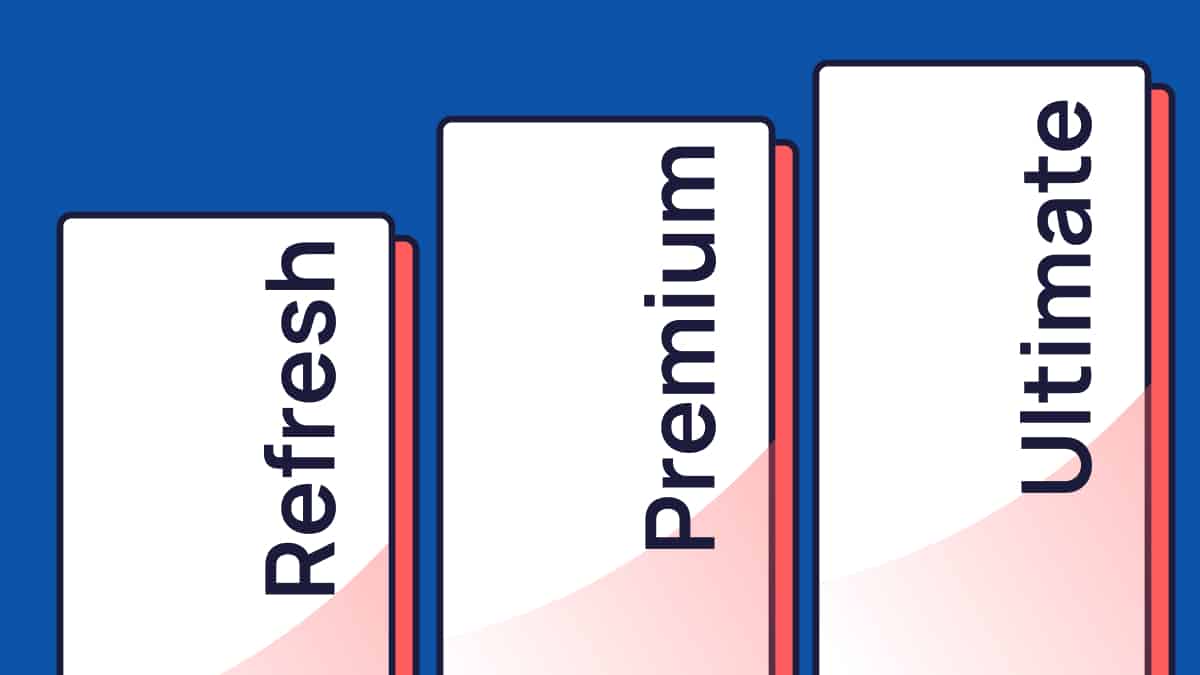
Refresh: from £1,900 (US $2,500). Best for pre-seed and seed founders polishing an existing deck.
Premium: from £3,325 (US $4,450). Best for Series A and B raises where the deck has to do real lifting.
Ultimate: from £8,550 (US $11,400). Best for Series C and beyond, with story, design, a custom template and training.
Those are starting figures. Final pitch deck design cost moves up depending on slide count, animation, custom data visualisation, and whether you need help with the story as well as the design. We’ll come to all of that in a moment.
If you want the full breakdown of what’s inside each package, we cover it in our presentation design packages post.
What you actually pay for at each price point
Most founders compare quotes from across the spectrum, not just within agency-land. Here’s the honest version of what each price band actually buys you in 2026.
Under £500
You’re looking at AI tools (Gamma, Beautiful.ai, ChatGPT-generated decks) or a Fiverr designer using the same template they’ve used a thousand times before. You’ll get a formatted deck. The slides will be ok. Nothing about the design will be specific to your brand, your audience, or your raise. For a low-stakes internal update, fine. For a Series A pitch in front of a partner, it’s a bad bet.
£500 to £1,500
Mid-range freelancers, often working off a stock template with a bit of custom polish. Quality varies wildly depending on the freelancer’s experience with pitch decks specifically. You’re rolling the dice on whether they understand investor narratives or just know their way round PowerPoint.
£1,900 to £3,000
Entry-level agency work or experienced specialist freelancers. At Hype, this is where Refresh sits. You bring an existing deck and your brand assets, we elevate it with consistent typography, sharper layouts, cleaner data slides, and basic animation. Same deck, but it stops looking like a homework assignment.
£3,000 to £8,500
Bespoke creative routes, advanced animation, dedicated project management, and a team that’s lived inside hundreds of investor briefs. Hype’s Premium package starts at £3,325 ($4,450) and is where most of our pitch deck clients land. You’re paying for taste, judgement, and design that does some of the talking for you in the room.
£8,500 and up
End-to-end work. Story development, design, custom charts, a bespoke PowerPoint template you can use for years, and a training session so your team knows how to keep using it. Ultimate from £8,550 ($11,400). This is the bracket Series C founders, IPO-prep teams, and flagship sales-deck owners tend to occupy.
What drives pitch deck design cost up (and down)
Five factors move pitch deck design cost more than anything else: slide count, whether you need story support or design only, whether the deck is animated or a flat PDF, how much bespoke data visualisation it needs, and how many rounds of stakeholder revisions it goes through.
You can send the same brief to five agencies and get five different numbers back. That’s not always agencies playing games. There are real variables that move pitch deck design cost up or down on every project. Five matter most.
Slide count (and why less is usually more)
Pricing scales with slides because design time scales with slides. But if a deck is bloated, our default advice is cut, not pad. A tight 12-slide investor narrative beats a 30-slide tour of your roadmap every time. We’d rather quote on the right deck than the long one. (For more on this, see our piece on how many slides a presentation should have.)
Story support or design-only
If your narrative is nailed and we’re going straight to design, costs stay leaner. If we’re shaping the story alongside the design, including discovery workshops, message hierarchy and narrative arc, that’s a meaningful uplift. It’s also the bit that often makes the biggest difference in the room.
Animation, or PDF-only
A deck that’s going to be presented live with motion, transitions and timing is more design work than one being emailed as a flat PDF. Decide upfront how the deck will actually be used. We’ll quote accordingly rather than padding for both.
Complex data visualisation
Standard bar charts are quick. Bespoke data visualisation, custom dashboards, or financial models translated into something legible at the back of a boardroom is real work. SaaS founders with multi-cohort retention stories or biotechs with clinical pipelines should expect this to sit on the price.
Revisions and stakeholder ping-pong
Every package includes a fixed amount of revision time. Refresh comes with one round of amends (four hours), Premium with two rounds, and Ultimate with three. Ninety-nine times out of a hundred, that’s plenty.
Where it isn’t, and where pitch deck design cost starts to climb, is when there are multiple stakeholders client-side all pulling the deck in different directions. One round of CFO edits, then the CMO weighs in with a contradictory set, then the founder reverses both. Every fresh round adds design hours, and those hours have to be billed.
The fix lives on the client side, not ours. Get internal alignment before the first review, and route feedback through one named owner. Decks that go straight through to sign-off cost what we quoted. Decks that bounce around three departments, won’t.
Why we publish our prices when most agencies don’t
Here’s an opinion most pitch deck agencies won’t give you, because giving it would cost them money.
The reason most presentation agencies don’t publish their pricing is that they want to charge as much as they can per client. Two founders with identical briefs can end up paying wildly different fees for the same scope of work. The variable isn’t quality. It’s how big and how desperate the buyer looks.
We don’t operate that way. We publish our pitch deck design cost on our pricing page, we scope by slide count, and the price is the same whether you’re a two-person seed-stage startup or a 500-person scale-up. Identical brief, identical quote.
If you’ve ever felt like an agency was pricing the room rather than the work, that’s because they were.

The buy-cheap-buy-twice trap
Buy cheap, buy twice. We’ve watched it play out enough times to put it in writing.
Recently, the founder of a SaaS company came to us for a Series C deck. The numbers behind the raise were significant. They went to a cheaper alternative first, partly because the quote was lower, partly because the deadline felt manageable. The deck came back, in their words, “fine”. It said the right things on paper. It looked alright.
But they had no confidence in it. They couldn’t walk into a room with that much capital on the line standing in front of slides they weren’t proud of. So they came back to us. We built the deck at our original quote. The round closed at the size they wanted.
That’s the bit cheap quotes don’t price in. Not whether the slides are technically acceptable, but whether you walk into the meeting believing the deck is helping you win. For a high-stakes raise, “good enough” is the most expensive option on the menu, because the cost of not closing the round is everything.
How long does a pitch deck take?
A Hype pitch deck takes from two days to six weeks, depending on the package. Pitch deck design cost is one half of the conversation. Turnaround is the other. Roughly how long each Hype package takes from kickoff to final files in 2026:
- Refresh: as quick as two days, depending on slide count and scope.
- Premium: typically one to three weeks, with built-in review rounds.
- Ultimate: two to six weeks. The discovery workshop, story development, and bespoke template take real time to do properly.
Rush turnarounds happen, and we’d much rather have the conversation upfront than discover the deadline mid-project. If your investor meeting is in a fortnight, tell us in the kickoff call.
Which pitch deck design package is right for your raise?
A quick framework, because this is the question we get most often.
If you’re pre-seed or seed and your existing deck is most of the way there but looks like it was assembled in a hurry, Refresh is your answer. If you’re raising Series A or B and the deck has to do meaningful commercial lifting in front of partners, Premium is where most of our pitch clients land. If you’re going Series C or beyond, or the deck needs to double as a sales asset for the next 12 months, Ultimate earns its keep.
Still not sure? Send us your existing deck and a sentence about the round. We’ll come back with a straight answer, including telling you to start cheaper if that’s the right call.

The bottom line
Pitch deck design cost isn’t really a number. It’s a decision about how much you’re willing to back yourself in the room. Cheap decks have their place. Big-stakes raises aren’t it.
If you’re sizing up a deck for a real round and want a transparent, scoped quote rather than a finger-in-the-air estimate, we’d love to hear from you.
Book a 30-min discovery call → hypepresentations.com/contact
FAQs
How much does a pitch deck cost in the UK in 2026?
Hype’s pitch decks start at £1,900 for our Refresh package, £3,325 for Premium, and £8,550 for Ultimate. Across the wider market, you’ll see anything from a couple of hundred pounds for an AI-built template up to £15,000+ for fully bespoke agency work. The right number depends on what’s at stake.
How much does a pitch deck cost in the US?
Our US starting prices are $2,500 for Refresh, $4,450 for Premium, and $11,400 for Ultimate. We quote in dollars for US clients to keep procurement and budgeting clean.
What’s the cheapest option that’s actually any good?
For low-stakes internal decks, AI tools or a low-cost freelancer can be fine. For an investor pitch, the cheapest option that consistently holds up is an entry-level agency package or an experienced specialist freelancer, somewhere in the £1,900 to £3,000 range.
What affects pitch deck design cost the most?
Four things move the price more than anything else: slide count, whether you need story support or just design, whether the deck will be animated for live presentation or sent as a flat PDF, and how much custom data visualisation it needs.
How fast can you turn a pitch deck around?
Refresh can be as quick as two days. Premium typically takes one to three weeks. Ultimate runs two to six weeks because of the discovery workshop and story development. We can sometimes accelerate, but always tell us the deadline upfront.
Is it worth paying for a bespoke pitch deck?
For a serious raise, yes. The cost of redesigning a deck after a failed pitch is always higher than the cost of doing it properly first time. The Series C founder we mentioned above is a typical case: cheaper quote, no confidence, came back, deal closed.